Last updated November 22, 2026
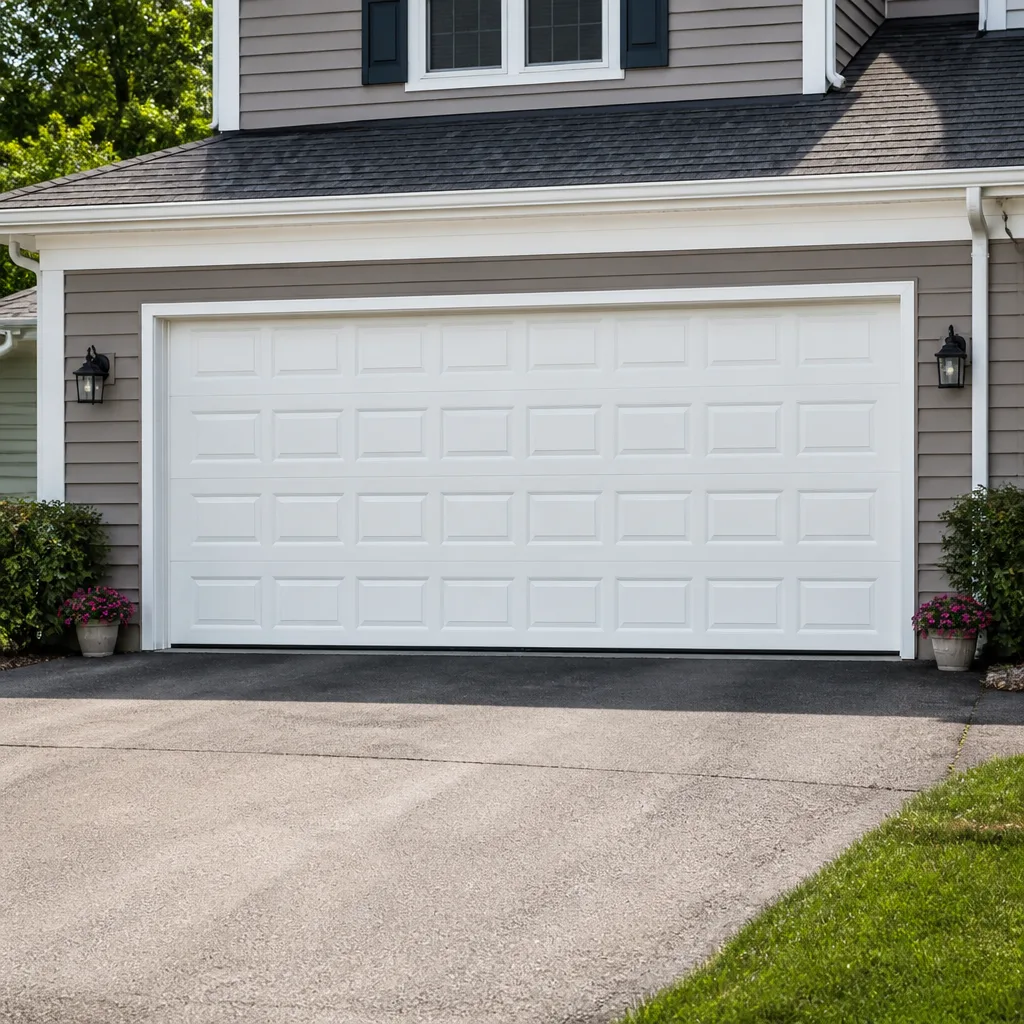 Raised-panel steel
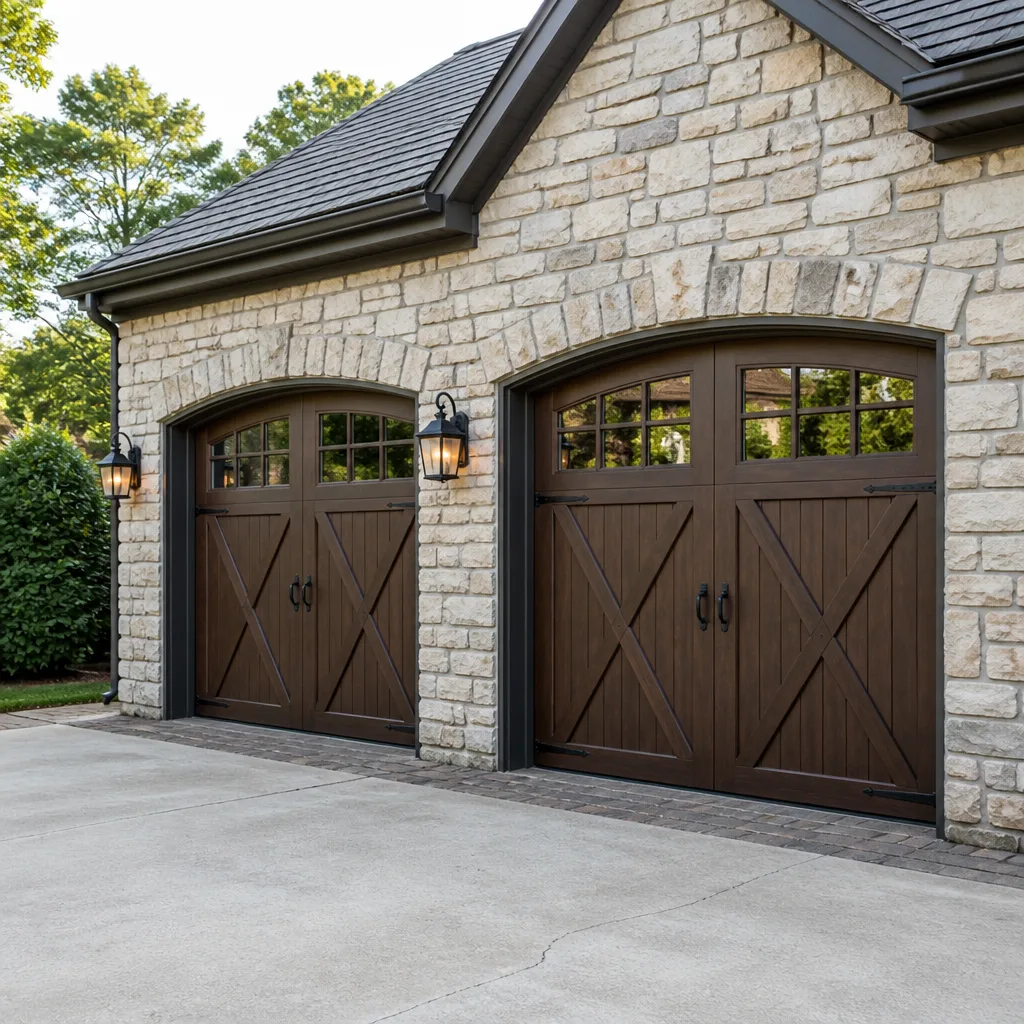 Carriage house
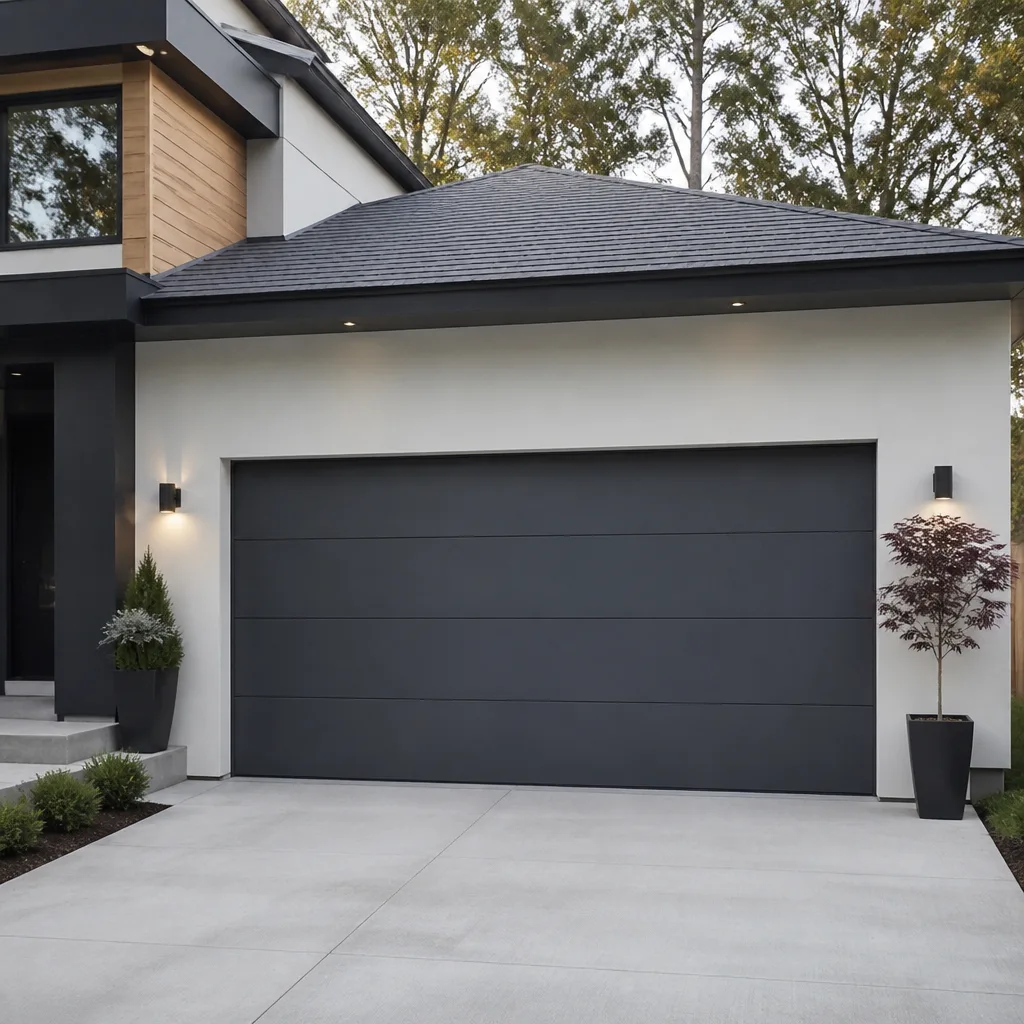 Modern flush
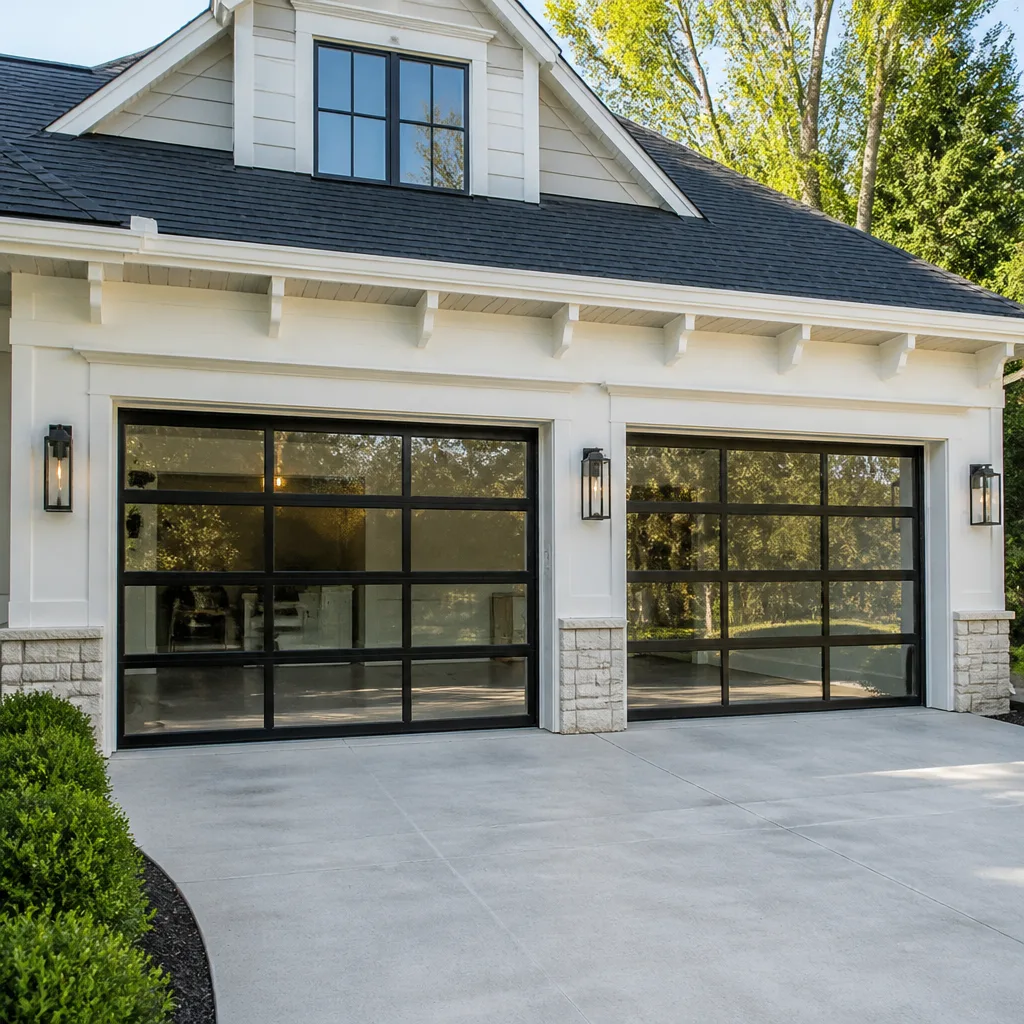 Full-view glass
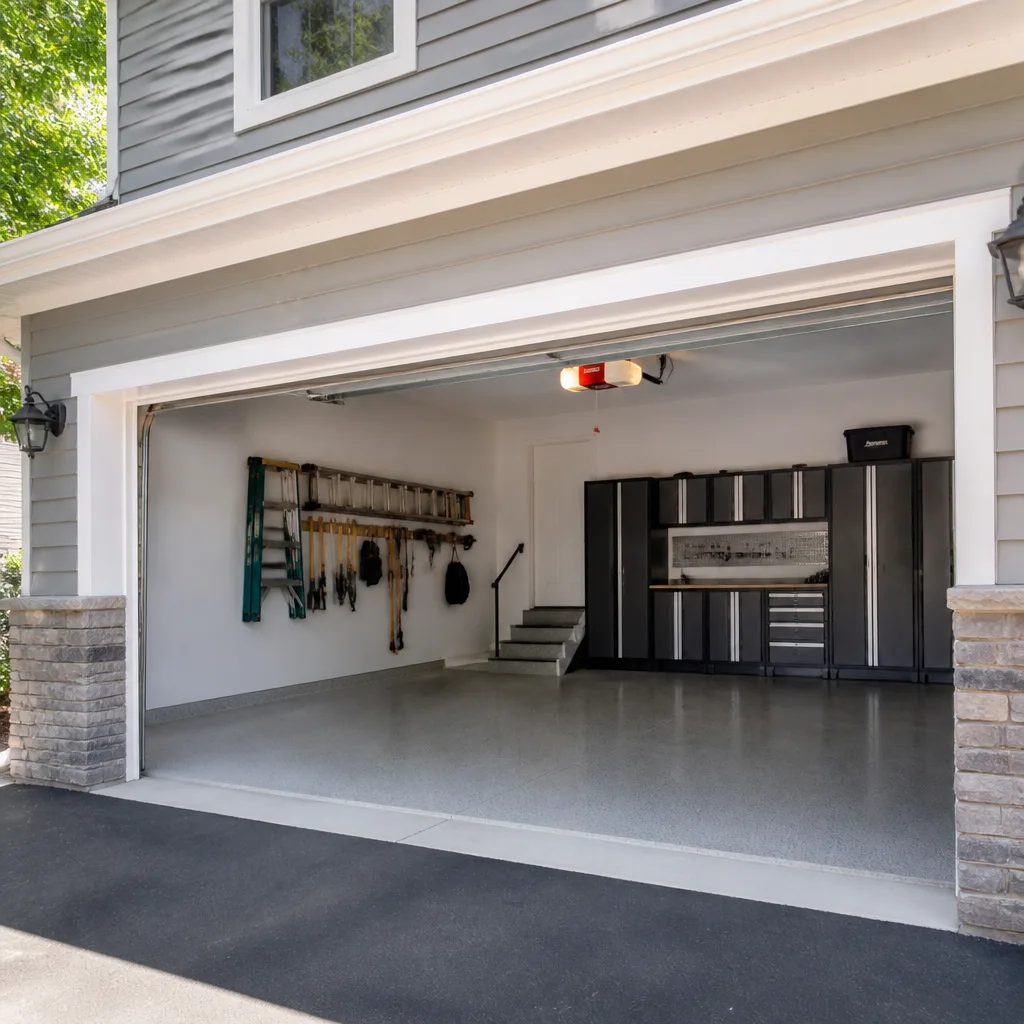 LiftMaster openers
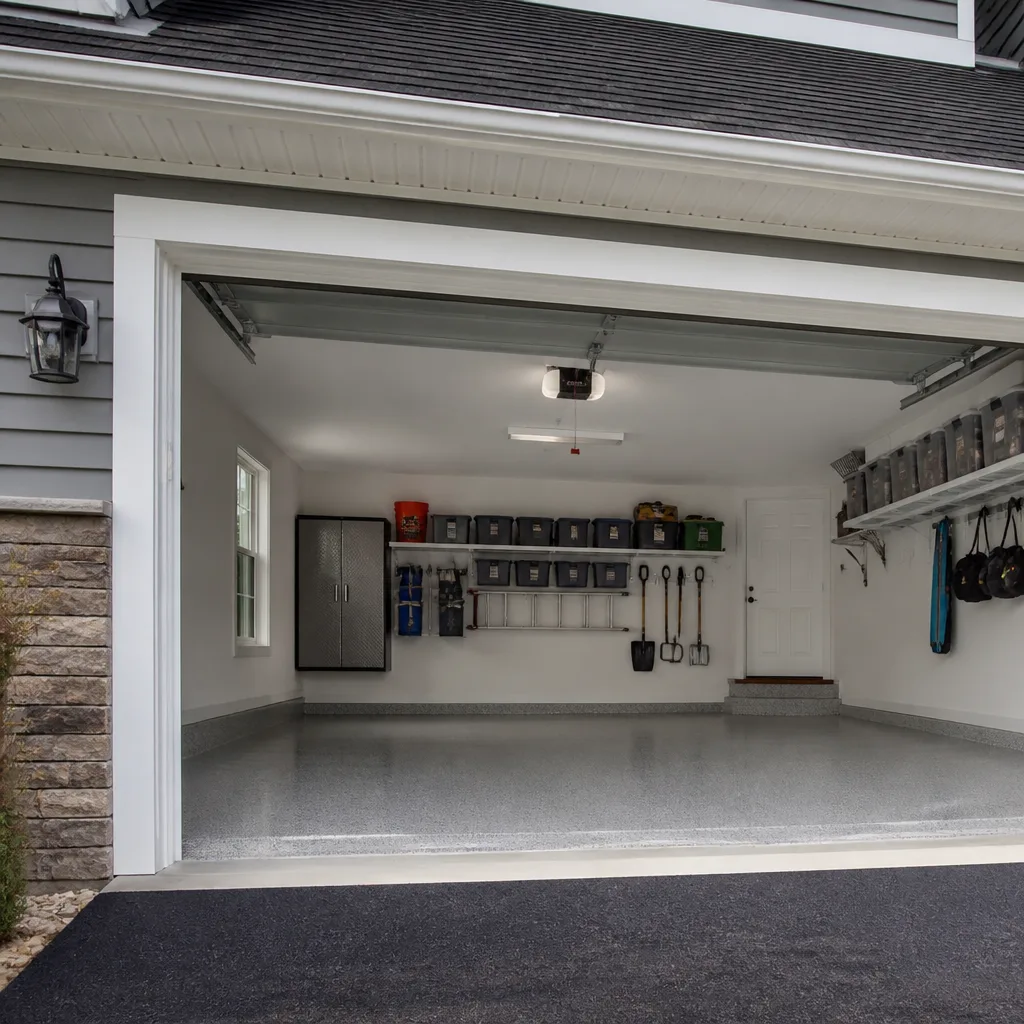 Chamberlain openers
Full 25-point door and opener safety check with every visit - springs, cables, rollers, tracks, and your LiftMaster or Chamberlain opener included
You get a price before we start. It does not change when the pro arrives.
Get your free estimateThe Complete Guide to Garage Doors in Apple Valley
Most Apple Valley homes went up between 1985 and 2005, and that single fact explains a lot of the garage door calls we get. A torsion spring built into a house from that era has a rated life of about 10,000 cycles, and a two-car door used twice a day burns through that in roughly seven to ten years. Plenty of original springs in town are already past that mark, which means homeowners usually find out the hard way, when the door stops moving. This guide covers the parts of garage door ownership that national checklists skip: how our frost and soil shape seal and track choices, what the HOA-heavy neighborhoods around Apple Valley expect, how to read the age of your opener, and what a realistic repair timeline looks like.
Quick Answer
A garage door in Apple Valley needs service on three tracks: springs and cables that wear out on a cycle count, seals and tracks that take a beating from a 42-inch frost depth and long freeze-thaw swings, and openers whose electronics age faster than the door itself. If the door is balanced and the opener runs but the door won’t move, you’re usually looking at a spring. If the door moves but the machine misbehaves, it’s the opener. Either way, a trained technician can tell you which in a single visit.
Styles & brands we work with
- Raised-panel steel
- Carriage house
- Modern flush
- Full-view glass
- LiftMaster openers
- Chamberlain openers
Table of Contents
- How Apple Valley’s Climate Affects Your Garage Door
- Frost Depth, Seals, and Tracks on Apple Valley Driveways
- HOA Communities and Replacement Constraints
- Single-Spring vs. Double-Spring Torsion Systems
- The Brands You’ll Find on Apple Valley Doors
- How to Read the Age of Your Door System
- A Realistic Service Timeline
- Safety Rules We Won’t Bend
How Apple Valley’s Climate Affects Your Garage Door
Apple Valley sits in Dakota County, where winters bring repeated cycles of deep freeze and thaw and summers swing to humid heat. That range does things to a garage door that a mild-climate guide never mentions. Steel panels expand and contract, and the seams where sections meet take the brunt of it. Lubricant that’s fine in July turns to a stiff paste in January, which is why a door that ran quietly in fall can groan and strain by the first cold snap.
Wood-composite and steel-backed doors with a wood-grain finish, common on the residential streets around Apple Valley, also move with moisture. The panels themselves hold up, but the hardware connecting them, the hinges, rollers, and the bottom bracket, works harder as the door flexes. We see more roller and hinge wear here than you’d expect on doors of the same age in a steadier climate.
What this means for you:
- Lubrication matters more often. A door that runs smoothly in a mild climate may want attention twice a year in Apple Valley, once before winter and once after the spring thaw.
- Weatherstripping wears faster. The bottom seal and the perimeter stops flex constantly with the temperature, and small cracks turn into visible gaps within a couple of seasons.
- Opener stress is seasonal. A marginal opener that works all summer can fail on the first genuinely cold morning, when the door is heaviest and the grease is thickest.
None of this is a reason to panic. It’s a reason to look at a garage door as a piece of equipment with a service rhythm, not a permanent fixture. When something does give, garage door repair starts with figuring out whether you’re dealing with wear, a failed component, or an adjustment problem.
Frost Depth, Seals, and Tracks on Apple Valley Driveways
Dakota County’s frost depth runs about 42 inches, and that number has a direct effect on your garage door even though the door never touches the ground it describes. Frost that deep means the ground beneath your driveway and the apron in front of the garage heaves and settles each winter. That movement pushes against the concrete, shifts the slab edges, and puts uneven pressure on the bottom of the door.
A standard bottom seal is built to sit flat against a level surface. When the driveway apron lifts or drops by even a fraction of an inch, the seal no longer makes even contact. You get a gap at one corner, cold air and snow find their way in, and over a couple of winters the rubber starts to tear where it’s being pinched. This is one of the most common reasons Apple Valley homeowners call about drafts and water in the garage, and it’s almost never the seal’s fault alone.
How to sort it out:
- Check the contact line. Close the door and look along the bottom from inside. If you can see daylight under part of it, you have a contact problem, not just a worn seal.
- Look at the concrete edge. If the apron has cracked, spalled, or visibly heaved, a new seal alone won’t close the gap for long.
- Consider a heavier seal. A thicker or taller bottom seal, sometimes paired with a threshold strip, handles minor unevenness that a standard profile can’t.
- Have the tracks checked. Frost movement and settling also affect how plumb the side tracks stay, and a track that’s out of line drags on the rollers and stresses the opener.
Track choice and seal profile aren’t usually things a homeowner thinks about until a draft shows up. In a place with frost this deep, they’re worth getting right the first time rather than patching every spring.
HOA Communities and Replacement Constraints
Apple Valley has a lot of planned neighborhoods with homeowners associations, and those associations usually have a say in what your replacement door can look like. If you live in one of them, the most common constraint isn’t the door’s quality, it’s its appearance: panel style, color, window configuration, and sometimes the finish itself have to match what the association approved, often to keep a consistent look down the street.
This matters most when you’re replacing rather than repairing. A repair keeps the existing door, so the HOA isn’t involved. A full replacement means checking the association’s architectural rules before you order. We’ve learned it’s far cheaper to confirm the approved style up front than to install a door and find out it doesn’t meet the guidelines, so that conversation belongs at the very start of a replacement project, not after.
The brands you’ll see most often in these communities are Clopay, Amarr, and Wayne Dalton, largely because they offer broad style and color ranges that HOAs tend to prefer. If your home already has one of these, matching the existing look is straightforward. If it doesn’t, the association’s approved list usually tells you what’s acceptable.
- Get the written guidelines first. Ask your HOA for the current architectural standards before you pick a door.
- Match the neighborhood, not just your house. Associations often care about street consistency, so an approved style may already be the standard on your block.
- Keep the paperwork. Replacement records help if you sell and the next owner needs to show the door was approved.
Handling the HOA step early removes the main source of delay in a replacement project and keeps the whole thing on a predictable schedule.
Single-Spring vs. Double-Spring Torsion Systems
Most two-car garages in Apple Valley should have a double-spring torsion system, and plenty don’t. Here’s why that matters. A torsion system uses springs mounted on a shaft above the door to counterbalance its weight. A single spring on a wide, heavy two-car door is working near its limit every time the door moves. Add a second spring and the load splits between them, which is why a matched pair lasts longer and gives you a crucial safety margin if one spring ever fails.
The difference shows up in two places. First, lifespan. A double-spring setup distributes the cycle count across two springs, so the door does more work before either one reaches its rated life. Second, failure behavior. When a single spring on a heavy door breaks, the door drops fast and hard. When one spring of a matched pair breaks, the second spring still carries part of the load, which makes the failure far less violent.
How to tell which system you have:
- Look above the door. A torsion system has a horizontal shaft running across the top with one or two coiled springs on it. A single spring is one long coil; a pair is two shorter coils, often with a center bearing plate between them.
- Count the springs, not the coils. It’s easy to mistake a single long spring for two springs pushed together. Look for a gap or a mounting plate in the middle.
- Size matters. A door wider than about nine feet, and any door with a heavy or insulated panel, benefits most from a matched pair.
If you’re replacing springs anyway, this is the moment to decide whether the door should have a pair instead of a single. It’s a straightforward upgrade during a planned replacement and a much harder call once the door is already down. Torsion and extension springs are the most dangerous parts of a garage door to touch, and a trained technician treats them that way. Our garage door spring repair is a dedicated service for exactly this reason, not a side job tacked onto general repair work.
The Brands You’ll Find on Apple Valley Doors
Apple Valley’s housing stock carries a specific mix of door and opener brands, and knowing which ones you’re dealing with is most of the diagnostic work. On the door side, Clopay, Amarr, and Wayne Dalton show up most often in the neighborhoods built during the 1985 to 2005 boom, and those three cover the bulk of the panel and hardware replacements we handle. On the opener side, LiftMaster, Chamberlain, Genie, and Craftsman account for the large majority of what’s bolted to the ceiling.
We work on eight major brands: LiftMaster, Chamberlain, Genie, Clopay, Amarr, Wayne Dalton, Craftsman, and Raynor. That’s not a marketing list. It means when we open up an opener housing or measure a panel, we already know the parts layout, the common failure points, and the correct replacement parts for that model family. It’s the difference between diagnosing from memory and guessing from scratch.
Our technicians have up to 9 years of experience, and the practical benefit of that is simple: fewer return visits. If your door has a Clopay panel and a LiftMaster opener, we’re not learning your system on your time. We work on these systems, source the right parts, and finish the job.
A few things worth knowing about each brand family:
- Clopay and Amarr dominate steel panel doors in Apple Valley’s newer subdivisions, and both have predictable hardware that makes matching a replacement panel straightforward.
- Wayne Dalton doors show up often enough that we know their panel profiles and hinge patterns well.
- Genie openers are common on older installs and have their own quirks in the logic board and safety sensor wiring.
- LiftMaster and Chamberlain share a lot of internal design, which is useful when you’re chasing a remote or connectivity issue on a newer smart-compatible opener.
If your system isn’t on that list, we’ll tell you honestly rather than pretend otherwise. Knowing which brands we handle well is part of giving a straight answer.
How to Read the Age of Your Door System
You can usually date an opener without opening it up, and that’s the first thing worth doing when you’re deciding whether to repair or replace. LiftMaster, Chamberlain, and Genie all mark their units with a date code, and once you know where to look, the age of the machine becomes a fact rather than a guess.
How to find it:
- Find the manufacturer’s label. It’s usually on the back panel or the side of the motor housing. Look for a sticker or stamped plate with a model number and a code.
- Read the code. LiftMaster and Chamberlain typically use a four- or five-digit code where the first two digits represent the year and the next two the week, sometimes with a leading letter. Genie uses a similar year-week scheme on most of its residential units.
- Check the motor housing for a second label. Some units carry the date code on the housing and the safety information on a separate sticker. Read both.
- Notice the door itself. Confirming the age of the opener tells you a lot about the door it’s lifting. An original machine usually means an original door, which usually means original springs.
Knowing the age matters because it changes the recommendation. An opener from the last few years that’s acting up is usually worth fixing. A much older machine with a failing board or a stripped gear often costs more to repair than to replace, and the money is better spent on a modern unit with updated safety features. The same logic applies to the door: a single worn panel on an otherwise solid door is a repair, while a door with cracked panels and sagging hardware is often a replacement conversation.
If you can read a code but aren’t sure what it means, garage door opener repair starts with a diagnostic that includes confirming the model and age so the recommendation fits the machine in front of us.
A Realistic Service Timeline
Most garage door problems fall into one of two buckets, and the difference is what you can fix today versus what has to be ordered. Knowing which bucket you’re in before you call saves a lot of frustration, because it sets expectations up front.
What’s typically a same-day fix:
- Spring replacement. Torsion and extension springs are standard parts, and a trained technician usually carries the common sizes. A broken spring is often back in service the same day.
- Opener repair. Safety sensors, logic boards, gears, and remotes are commonly available, and most opener faults are diagnosed and corrected in one visit.
- Track and roller service. Rollers, hinges, and track adjustment are usually on-the-spot work.
- Bottom seal replacement. Seals are cut to length from stock, so a worn bottom seal is normally a single-visit job.
What usually requires ordering:
- A specific replacement panel. Matching a panel by style, color, and profile takes a manufacturer order, which adds lead time.
- A full door replacement. A new door is measured first, then ordered, then scheduled for installation. That’s a planned project, not a same-day call.
- Less common parts. An uncommon opener model or a discontinued component may need to be sourced, and we’ll tell you that before any work starts.
If your door is stuck and you can’t wait for a schedule, Apple Valley Garage Door Repair Pros handles emergency calls for exactly this situation. When it’s a scheduled replacement, we measure, quote, and order, and the price you agree to is the price you pay.
Safety Rules We Won’t Bend
Torsion springs and their cables are under extreme tension, and they cause serious injuries to homeowners who try to handle them without the right tools and training. Replacing one takes specialized winding bars, a controlled understanding of the load, and a healthy respect for what happens when a spring lets go. There’s no safe shortcut, and there’s no version of this job that’s worth doing yourself.
The same goes for anything with the door under tension. Never try to adjust or remove a torsion spring, an extension spring, or the cables running alongside them. If a cable snaps or a spring breaks, keep people and vehicles clear of the door and call a trained technician. The door may look still, but it may not be supported.
For openers, the safety reverse test is one thing a homeowner can and should check periodically. With the door closing, place a solid object in its path; the door should reverse. If it doesn’t, stop using the opener and get it looked at. That test protects the people and pets who cross the threshold, and it’s worth repeating now and then rather than assuming it still works.
Everything else, from panel inspection to seal checks, is fine for a careful homeowner to look at. But the parts that hold the door up, and the electrical work inside the opener, belong with a professional. That line isn’t negotiable, and it’s the reason we treat spring work as a skilled job rather than a quick fix.
Common Mistakes to Avoid
- Replacing one spring on a matched pair. When one spring fails, the other is almost certainly close to the same cycle count. Replacing just the broken one leaves you back in the same spot on a schedule you can’t predict. Replace the pair together.
- Greasing the tracks. Track surfaces and rollers aren’t meant to be lubricated; the rollers roll, they don’t slide. Grease on the tracks collects grit and causes binding. Keep tracks clean and dry.
- Ignoring a drafty bottom seal after a hard winter. In Apple Valley, a gap at the bottom is usually a sign of concrete movement, not just a worn seal. A new seal on top of a heaving apron only hides the problem for a season or two.
- Ordering a replacement door before checking the HOA rules. A door that doesn’t meet your association’s guidelines is an expensive mistake. Confirm the approved style before you buy.
- Choosing a single spring for a heavy two-car door. It wears out faster and fails harder. A matched pair is the right call for most two-car garages in town.
- Putting a new opener on a door with failing springs. The opener works harder when the door isn’t balanced, and it can wear out early. Fix the door’s balance first, then judge the opener.
- Assuming an old opener must be replaced. Read the date code first. A newer machine with a minor fault is usually worth repairing, and an older one is often not.
See the difference
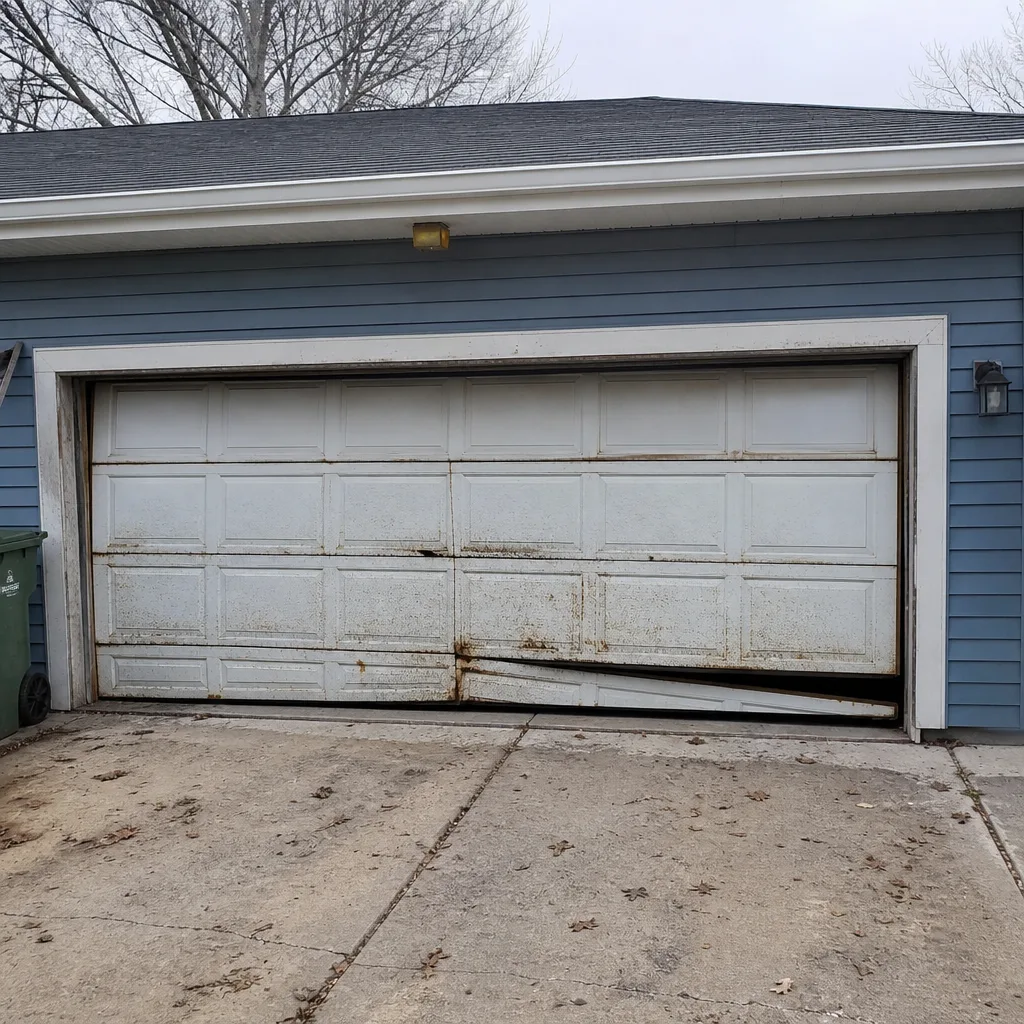 Before
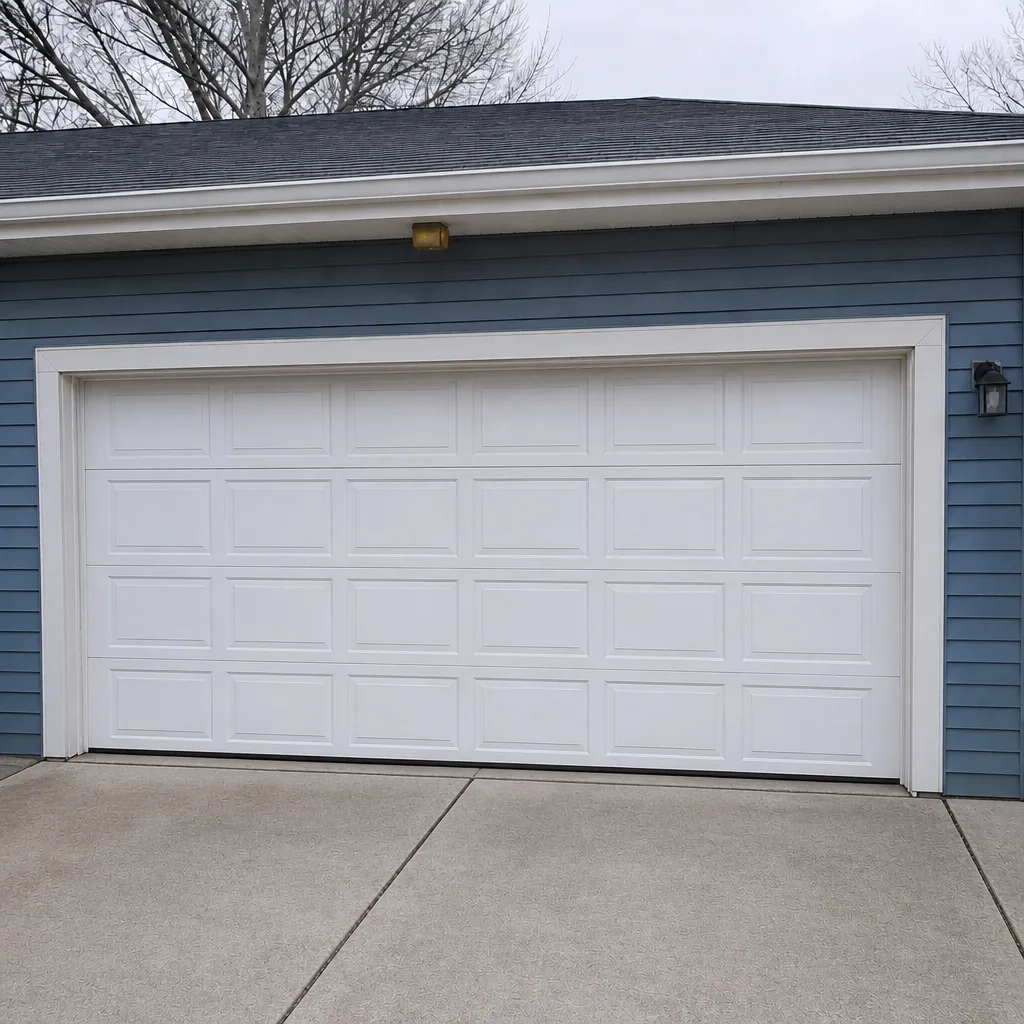 After
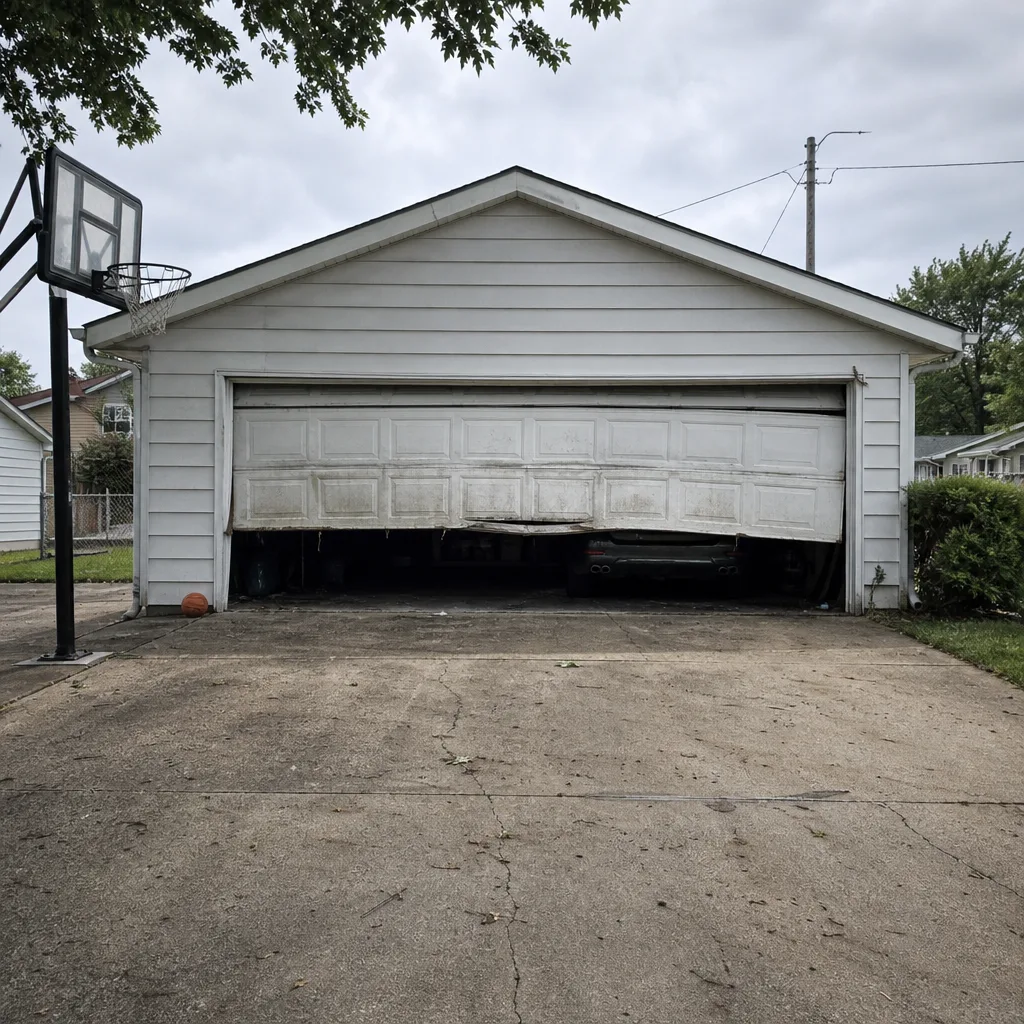 Before
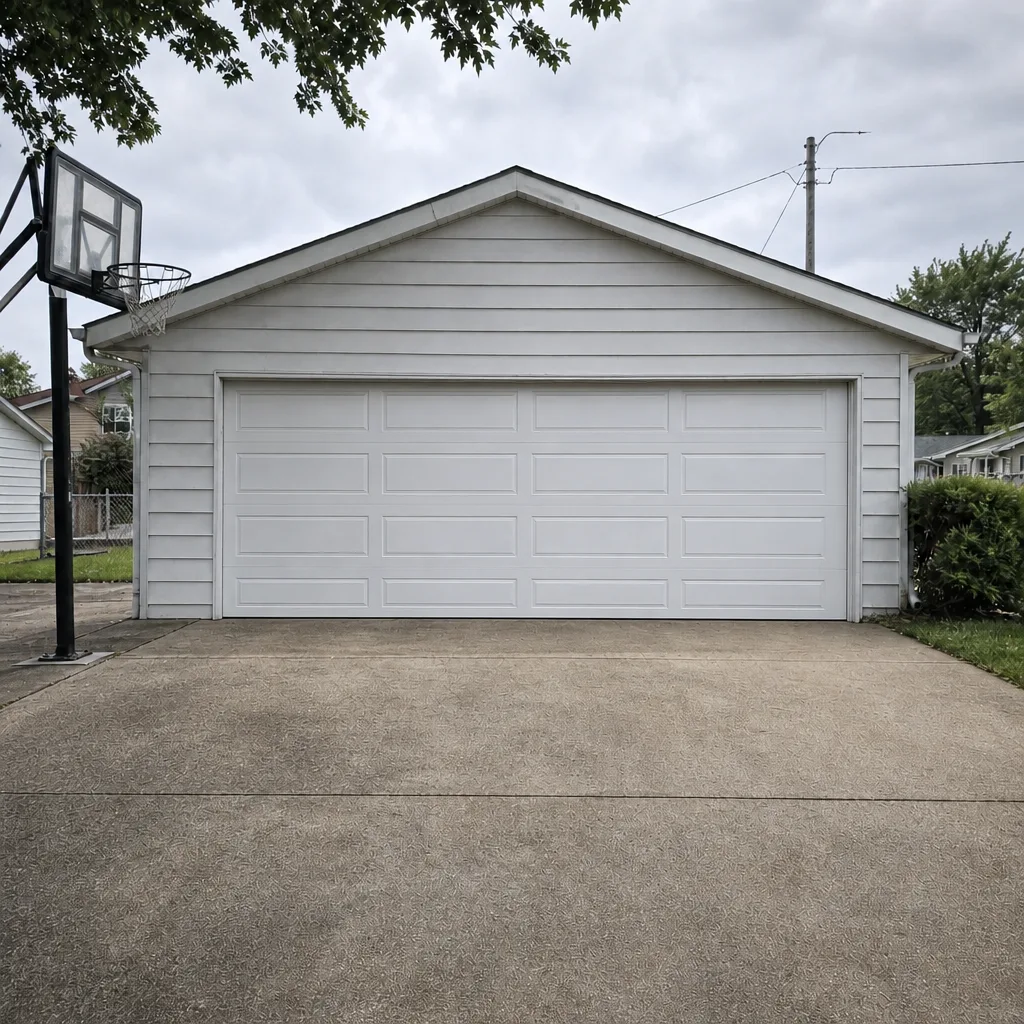 After
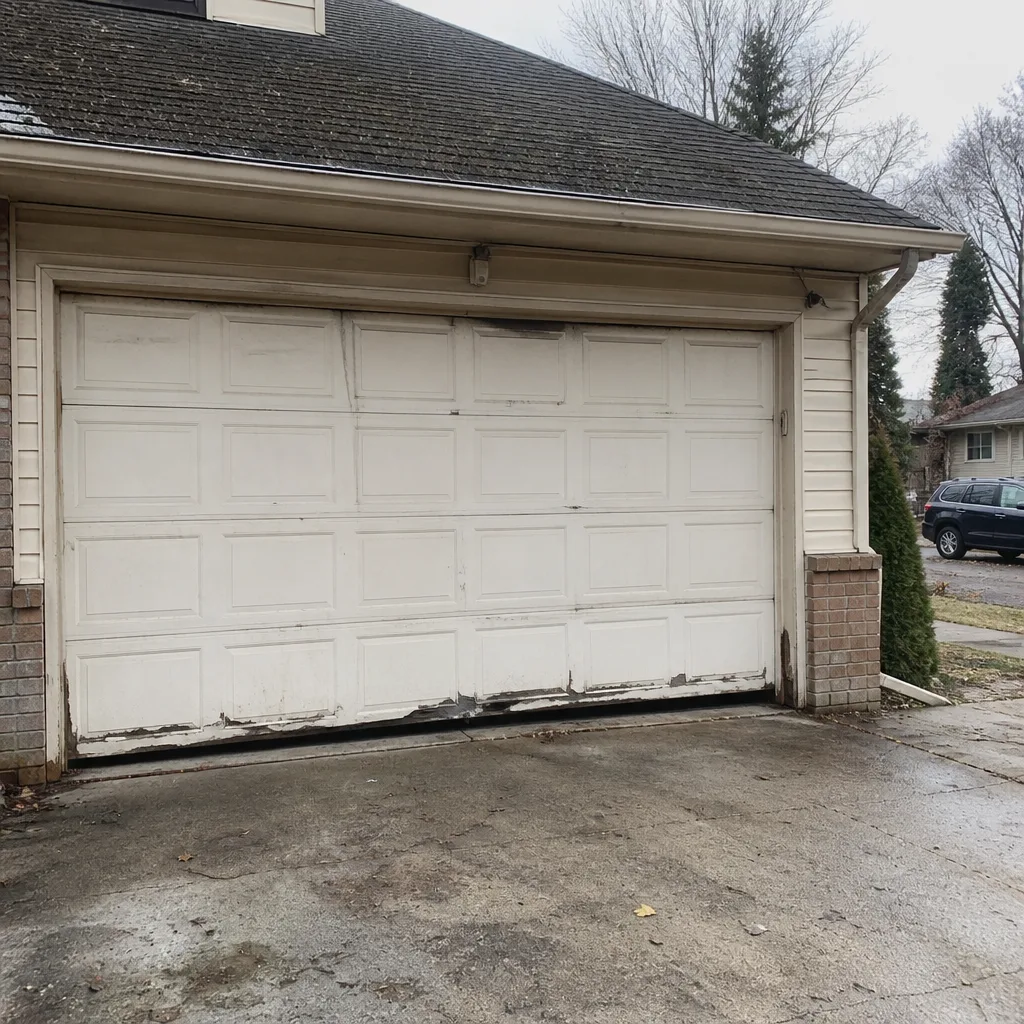 Before
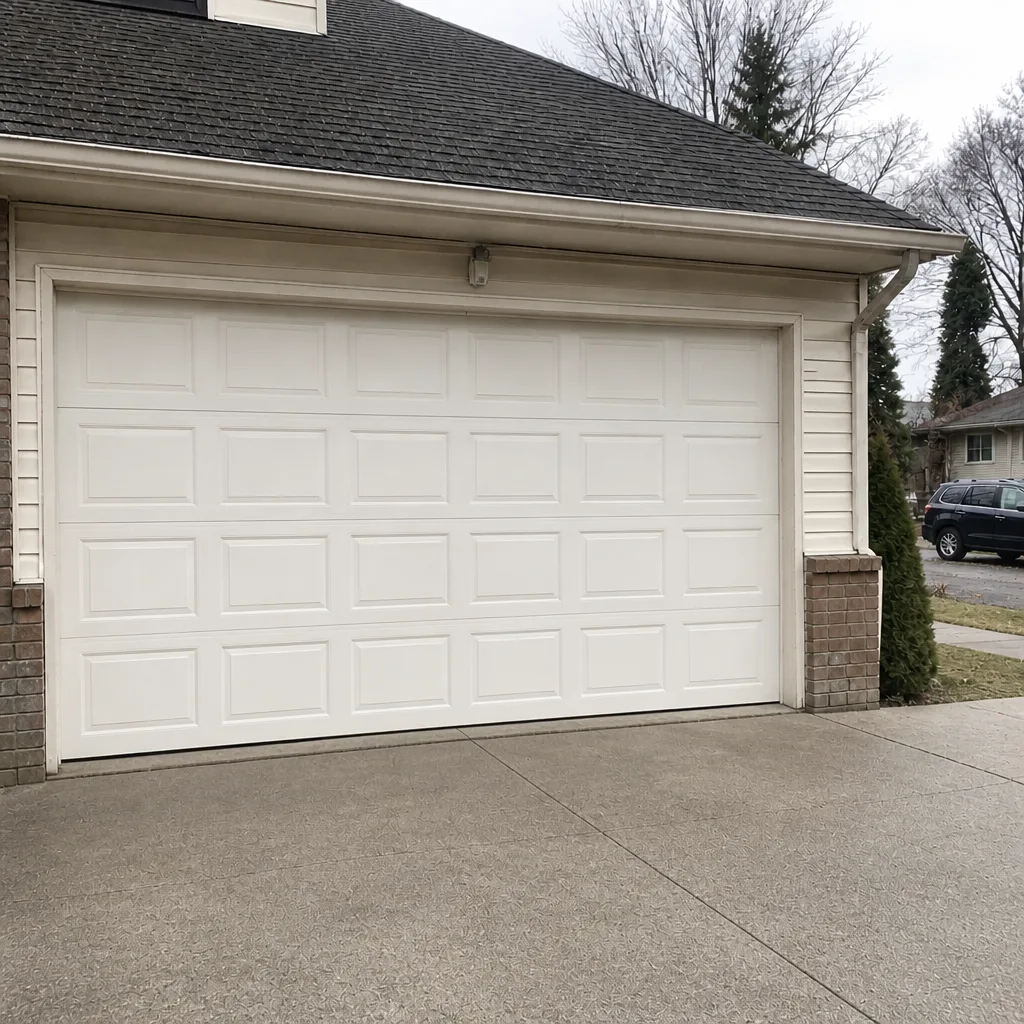 After
When to Call a Professional
Call a professional if your door won’t open or close, if you’ve heard a loud snap from above the door, if the door is uneven or hangs at an angle, or if the opener runs but the door doesn’t move. Those are signs of a spring, cable, or balance problem that shouldn’t be ignored. Call right away if a car is trapped inside or the door won’t close and you need to secure the garage. Also call if a safety reverse test fails, since that’s a protection issue, not a convenience one. Apple Valley Garage Door Repair Pros offers free estimates in Apple Valley, call (844) 914-3733. Our technicians have up to 9 years of experience, and we quote and agree on the price before any work begins.
Frequently Asked Questions
Because many Apple Valley homes were built between 1985 and 2005 with original springs that have already reached or passed their roughly 10,000-cycle rating. A two-car door used a few times a day gets there within seven to ten years. If your spring is original to a house from that era, it’s on borrowed time regardless of how smooth the door feels. Call (844) 914-3733 to have it checked before it fails.
Replace both if they’re a matched pair. When one spring breaks, the other has typically lived the same number of cycles and is close to failing too. Swapping just one leaves you exposed to a second breakdown soon after. A pair costs roughly twice a single spring, but it’s the right long-term call. Call (844) 914-3733 for a free estimate.
Check the date code on the label on the back or side of the motor housing for LiftMaster, Chamberlain, and Genie units. The code usually shows the year and week of manufacture, and an original opener on a 1985 to 2005 Apple Valley home confirms the door and springs are the same age. If you can’t read the code, a technician can date it during a diagnostic visit. Call (844) 914-3733 to schedule one.
No. Torsion and extension springs are under extreme tension, and mishandling them causes serious injury. There is no safe do-it-yourself shortcut, and professional technicians use specialized tools and training for exactly this reason. Keep people and vehicles clear of the door and call (844) 914-3733.
Most two-car garages in Apple Valley should have a matched pair. A single spring on a heavy, wide door is working near its limit and fails harder when it breaks. A pair splits the load and gives a safety margin. If you’re replacing springs anyway, that’s the moment to upgrade. Call (844) 914-3733 to confirm what your door needs.
Spring replacement, opener repair, and most on-the-spot fixes are typically done in a single visit, while panels and full doors require ordering. The price is quoted and agreed before any work starts, so the written estimate sets the final number. Call (844) 914-3733 for a free estimate.
The Bottom Line
Your Apple Valley garage door is a piece of equipment shaped by the city’s climate, its housing stock, and its neighborhood rules. The 42-inch frost depth works on your seal and tracks every winter. The 1985 to 2005 building era means a lot of original springs are already past their rated life. HOA guidelines decide what your replacement door can look like. And the brand on your opener or door tells a trained technician most of what they need to know before they arrive. The rest comes down to a few honest calls: replace a matched pair of springs rather than one, read the date code before deciding on an opener, and never touch the parts under tension yourself. Apple Valley Garage Door Repair Pros handles repair, opener service, and full installation in Apple Valley, so you don’t have to hand the job off to a second company as it evolves. Call (844) 914-3733 for a free estimate.
Written by the team at Apple Valley Garage Door Repair Pros.